Freya Hansen · 2 September 2026
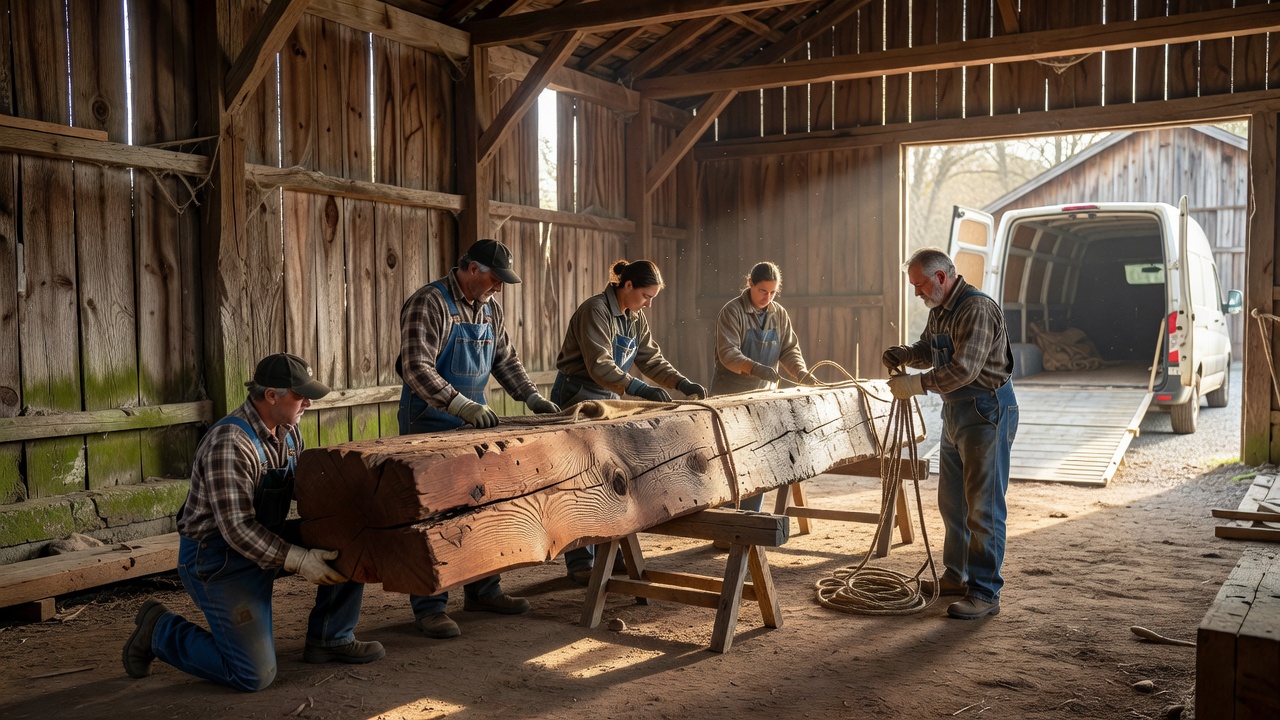
A historic barn in Lancaster County, Pennsylvania, has yielded an exceptional cache of reclaimed oak timbers now destined for a prominent museum installation. Built in 1852, the structure stood for more than 170 years before its owners sought to clear the site for new construction. Specialists in reclaimed barnwood were called in to evaluate the materials and quickly recognized the superior quality of the white oak beams.
Discovery and Assessment
The oak, primarily Quercus alba, displayed tight grain patterns and minimal checking, a result of the barn's well-ventilated design and dry interior conditions. Dendrochronology testing dated the oldest timbers to trees felled in the late 1840s. Roughly 12,000 board feet were salvaged, including 8-by-8 and 10-by-10 posts that had supported the hayloft for generations. Each piece was numbered, photographed, and transported to a climate-controlled facility for milling and stabilization.
Local historians note that similar barns once dotted the Pennsylvania countryside, yet few remain intact. The reclaimed oak will form custom display cases and interpretive panels at the Philadelphia Museum of Art. Curators selected the material for its authentic patina and structural integrity, which align with the exhibit's focus on 19th-century American craftsmanship.
Preparation for Installation
Before installation, the wood undergoes careful drying to a moisture content of 8 percent. Surface checking is filled with reversible adhesives, and each board is planed to precise dimensions while preserving original tool marks. The resulting panels will house artifacts from Pennsylvania's agricultural heritage, allowing visitors to appreciate both the objects and the wood that protects them. Project managers report that the barnwood's natural color variations will complement the exhibit lighting, creating a warm, immersive environment. This project demonstrates how reclaimed materials from agricultural structures can serve new cultural purposes while honoring their origins.