Noah Schmitz · 2 September 2026
A 19th-century barn in rural Lancaster County, Pennsylvania, has provided a rare cache of old-growth white oak for a major museum installation. Built in 1847, the structure stood unused for decades before its timbers were assessed for architectural reuse. Experts identified the wood as exceptionally dense, with tight growth rings indicating slow growth over more than 200 years.
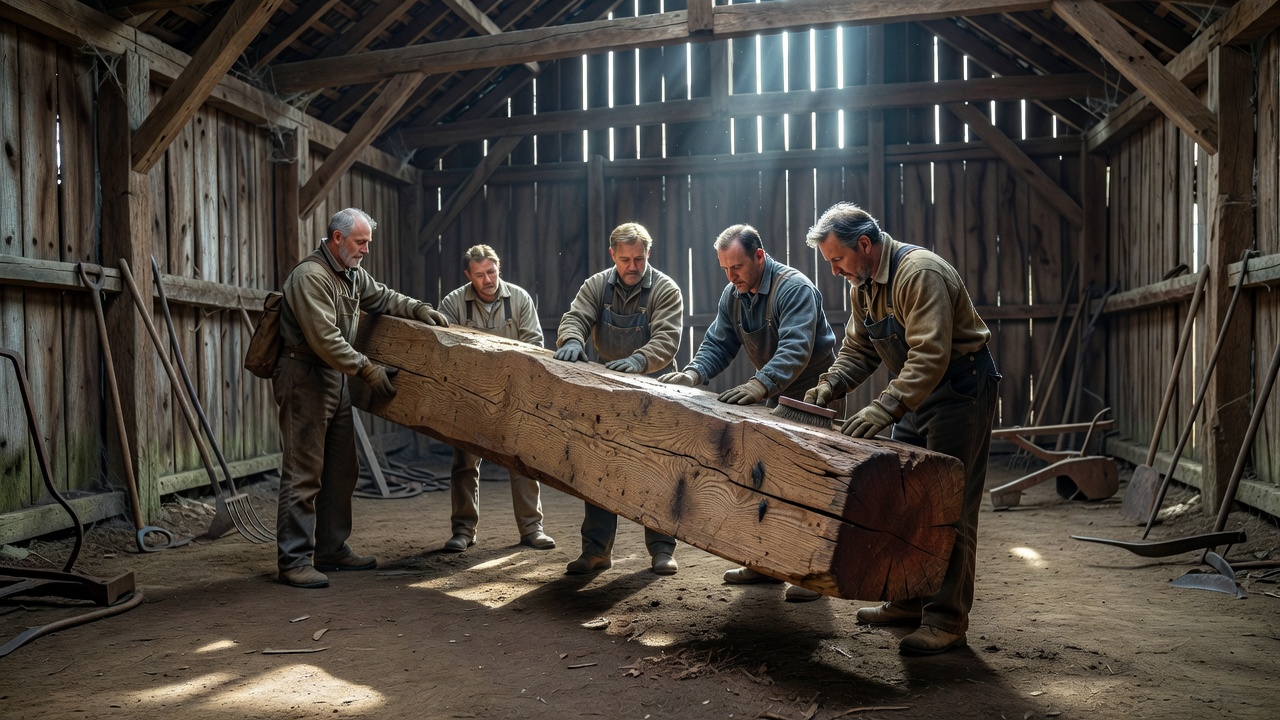
Local timber framers and historians collaborated to document the barn before disassembly. Each beam was tagged, measured, and transported to a climate-controlled facility for drying and milling. The project yielded approximately 18,000 board feet of usable material, far exceeding typical yields from similar structures.
Reclamation and Wood Processing
Reclamation crews employed hand tools and minimal machinery to preserve the original patina and tool marks. The white oak, known for its resistance to decay, showed minimal insect damage despite its age. After milling, the boards underwent a six-month kiln-drying process to stabilize moisture content at 8 percent. This preparation ensures compatibility with modern museum climate controls.
Grading revealed that 65 percent of the stock qualified for premium architectural use, with distinctive figuring prized by designers. Remaining offcuts were allocated for smaller elements such as trim and inlays. All work followed guidelines from the Pennsylvania Historical and Museum Commission to maintain historical integrity.
Museum Installation and Legacy
The processed oak will form the primary interior paneling and display cases in a new wing at the Philadelphia Museum of Art dedicated to early American craftsmanship. Architects specified the material for its acoustic properties and warm tone, which complement existing stone and plaster elements. Installation is scheduled to begin in early 2025 and is expected to take nine months.
Project leaders note that the barn’s wood will allow visitors to experience authentic 19th-century material in a contemporary setting. Surplus timber has been reserved for future educational programs on sustainable building practices. The effort underscores growing interest in reclaimed barnwood as both a historical resource and a sustainable alternative to newly harvested lumber.